The real cost of handcraft
6 months.
1 rug.
200 MAD
profit.
This is the reality for thousands of Moroccan artisans. Their craft takes months. Their reward barely covers the wool. We built CraftHouse to change this.

4,200€
resale price in Paris — for a rug the artisan sold for 600 MAD
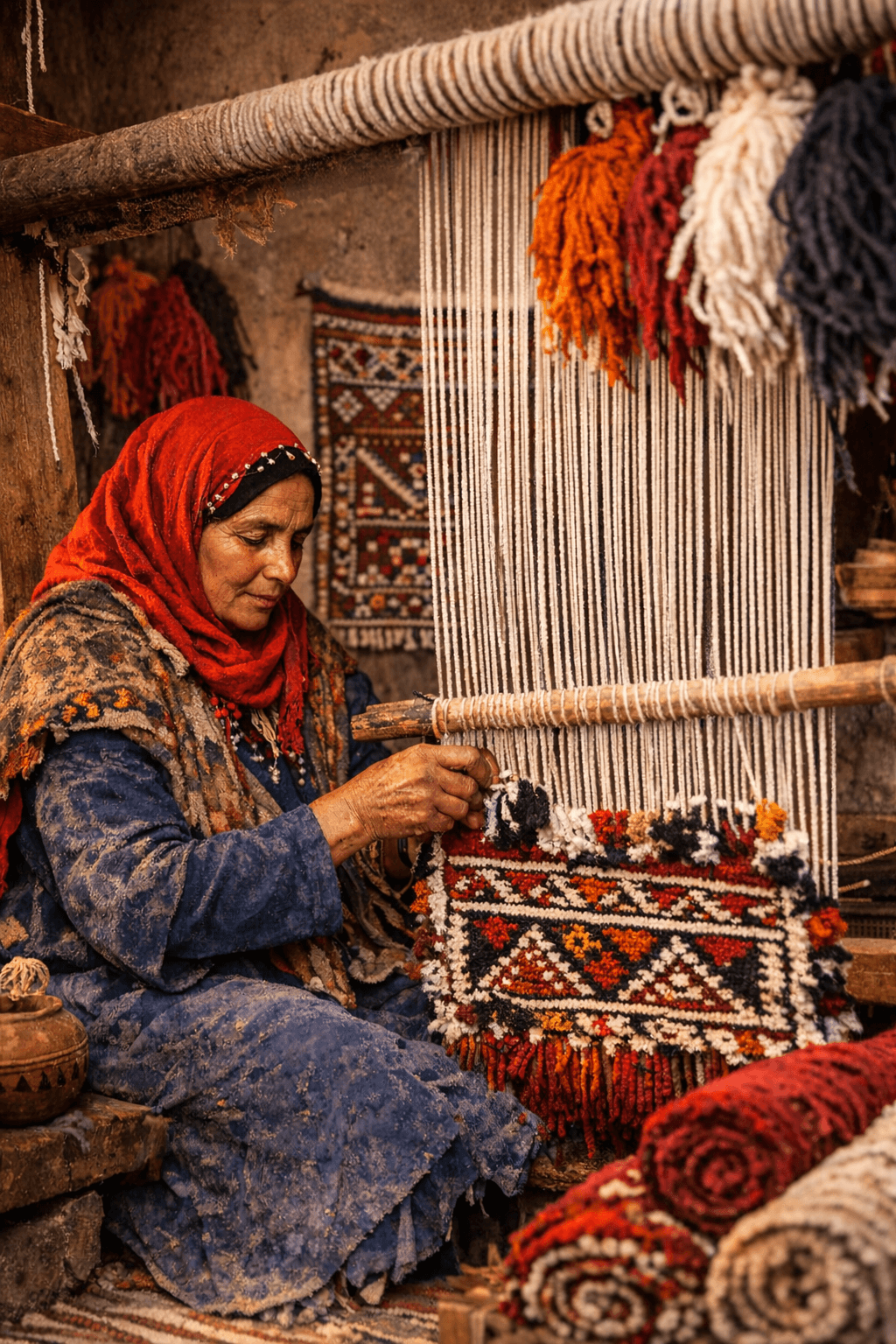
Meet Fatima.
She has been weaving since she was nine.
Fatima lives in the Drâa-Tafilalet region. Every morning at 5am, before the household wakes, she sits at her loom. She has been doing this for 34 years. Her fingers know every knot without thinking. Her rugs have sold in design studios in Milan, Amsterdam, and New York — though she has never seen those cities, and often doesn't know where her work ends up.
Last spring, she finished a rug that took her four months. She sold it to the local broker for 800 MAD — about 75 euros. The broker sold it to an exporter for 320 euros. It appeared in an online shop in Berlin for 1,890 euros. Fatima saw none of that difference.
"I know my rugs are beautiful. I just didn't know they were worth that much. Nobody told me."
The process
6 months of work,
invisible to the market
Sourcing raw materials
She travels to the souk before dawn to negotiate wool prices — the same price she paid ten years ago. She carries it home by bus.
Dyeing & spinning
Her hands stain deep red from the madder root. The smell of indigo fills the house for days. She works by natural light to save on electricity.
Weaving, knot by knot
Eight hours a day. Sitting on the same wooden bench her mother sat on. Her eyes follow patterns she learned at age nine. No shortcuts exist.
Finishing & selling
She brings the rug to market. The broker offers 600 MAD. She hesitates. She accepts. She needs the money for school fees.
The supply chain problem
Where does the money go?
Not to the artisan.
A 1,000€ rug. Five hands it passes through. The person who made it receives less than 80€. Follow the money.
Artisan
Receives ~8% of the final retail price
Local collector
Buys in bulk, adds 12% margin
Regional broker
Aggregates, warehouses, adds 20% margin
Exporter / agent
Handles export logistics, takes 25% cut
International retailer
Final retail markup — often 35%+
* Illustration based on a 1,000€ retail price. Percentages are approximate and vary by region and product category.
150K+
Moroccan artisans
Over 150,000 artisans in Morocco depend on craft as their primary income. Most are women. Most live in rural areas with limited market access.
92%
Never meet the buyer
92% of traditional artisans never speak directly to the person who buys their work. They have no idea who values it, or how much it is truly worth.
< 10%
Of retail value retained
In most traditional supply chains, the artisan retains less than 10% of the final retail price. The rest is absorbed by brokers, exporters, and retailers.
The CraftHouse model
We cut out the chain.
Not the artisan.
CraftHouse connects verified Moroccan artisans directly to international buyers — no brokers, no collectors, no exporters skimming the margin. The artisan sets their price. The buyer places the order. The money moves directly.
We handle the logistics, the compliance, the documentation, and the trust — so artisans can focus on what they do best: creating work that no factory ever will.
Before
8%
of retail value to artisan
With CraftHouse
68%
of sale price to artisan
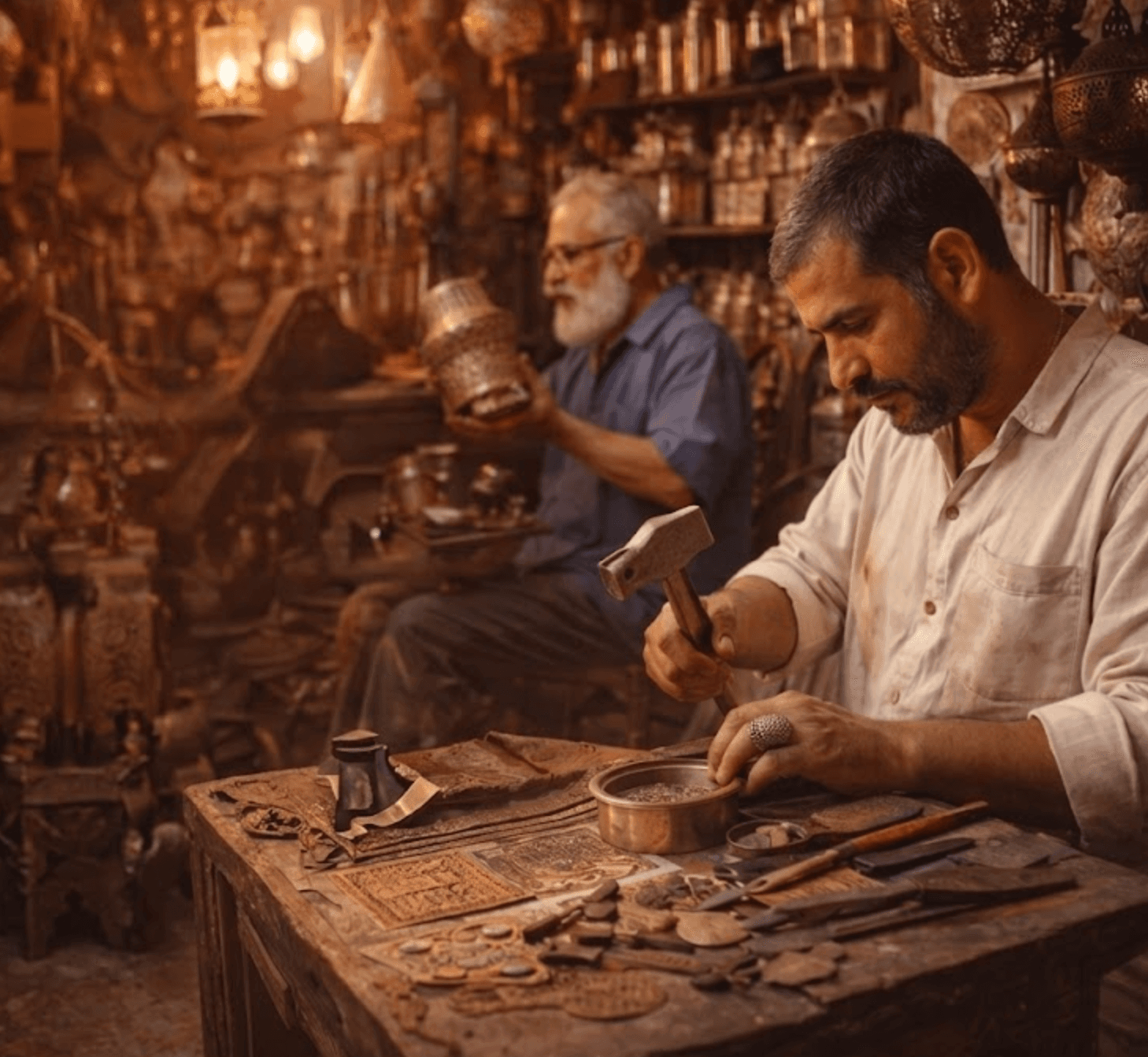
"For the first time, I know who is buying my work — and I know it's worth it."
— Khadija, CraftHouse artisan since 2024
3×
Average income increase for CraftHouse artisans vs traditional intermediary chains
68%
Of the sale price goes directly to the artisan — not middlemen
40+
Countries where CraftHouse artisans now sell directly to buyers
0
Intermediaries between the artisan and your order
Be part of the change